Rabbit Haemorrhagic Disease (RHD & RHD2)


Rabbit Haemorrhagic disease (RHD) and RHD2

Most people have heard of the disease myxomatosis and how it can affect rabbits, but there’s another disease in the UK that our rabbits need protecting against. Rabbit haemorrhagic disease (RHD) – also known as Rabbit Haemorrhagic Disease Virus or Viral Haemorrhagic Disease (RHDV and VHD) has been in Europe since the late 1980’s after being first discovered in the People’s Republic of China in 1984 and spreading rapidly.

What is RHD?

RHD is a disease caused by a virus called the calicivirus. There is a 90% mortality rate for unvaccinated rabbits infected with RHD, however young rabbits under 4 weeks old appear to have a natural immunity and will be protected for their first few weeks of life. The disease causes blood clots within the blood vessels of body organs such as the heart, lungs, liver and kidneys. In turn these clots lead to a haemorrhage, where the vessel bursts and blood leaks from it. Death quickly follows and there is no known cure.

What are the symptoms of RHD?

Once infected, the rabbits will usually die within 3-4 days. With some rabbits there may be no symptoms and they may appear to be eating and acting normally just a few hours before being found dead. In these acute cases in the hours leading to death rabbits can show lethargy, fever and an increased respiratory rate. They will have very low blood pressure making it difficult for your vet to find a vein. Other rabbits may be found dead with blood from the nose, mouth and anus.

Vaccination

Thankfully, there is a vaccination against RHD in the UK. Up until a few years ago there were separate vaccines for Myxomatosis and RHD. Now there is a combination vaccine (Nobivac Myxo-RHD) which covers both diseases. Vaccines work by introducing (usually by injection) a weakened version of the virus into the body. The weak version is not enough to trigger the disease but it allows the body’s immune system to recognise the virus so that it is able to protect itself and mount a response should it come across the virus for real (immunity). The combination vaccine should be given to rabbits annually and can be given from 5 weeks old onwards.

RHD2

Unfortunately, the calcivirus can mutate and there is now a new strain of RHD in the UK. RHD2 was first identified in the UK in 2013 but retrospective studies suggest it has been here for longer. The Rabbit Welfare Association has been monitoring the cases of RHD2 and in the last few months there has been an increase in cases. The current combination Myxo-RHD vaccine DOES NOT offer protection against RHD2 so an additional vaccine is being recommended.

RHD2 is different to RHD1

Unlike the original strain of the disease RHD2 can affect young rabbits under 4 weeks. The incubation time is longer at 3-9 days and the mortality rate is lower at 5-70%, which sounds like a positive thing. However, at the recent RWAF conference (which I was lucky enough to attend) Dr. Richard Saunders, the RWAF Specialist veterinary advisor stated that the longer incubation date with the lower mortality rate meant the RHD2 virus was more likely to spread that the original strain, which would kill rabbits before they could spread the virus. He believes that within a few years RHD2 will be the more common of the two viruses in the UK.

How RHD and RHD2 are transmitted

The RHD virus is very hardy and can survive in the environment for months. It can survive freezing temperatures and those up to 50 degrees C for an hour. It can be transmitted between infected rabbits via discharge from the mouth, nose or eyes, via biting insects and the virus can live on inanimate items such as food bowls and bedding. Scavenger birds that have eaten the carcass of an infected rabbit can pass the virus on in their droppings and humans and other pets can track the virus around on their feet, shoes and clothes. This means that even indoor rabbits should be vaccinated and good hygiene and biosecurity measures put into practice. If you forage wild plants for your rabbits these should be thoroughly washed before feeding – although it should be pointed out that the benefit of this type of diet far outweighs the risk. Vaccinating your rabbits is the most effective way of protecting them.

RHD2 Vaccination problems

Some vets, especially those that don’t see a lot of rabbits still seem to be unaware of the increase in cases of RHD2. There are reports of some vets refusing to order in the vaccine deeming it unnecessary. However, there has recently been a lot of information in the veterinary press, as well as email alerts to vet practices from the RWAF so there is no excuse not to be up to date with information. On top of this, the RHD2 vaccine is manufactured and imported from abroad and the sudden demand for the vaccine has left some vet practices struggling to get hold of it. However, three veterinary wholesalers (NVS, Centaur and Henry Schein) are now able to supply Filavac vaccine against RHD2.

Vaccination key points

  1. The Nobivac Myxo-RHD vaccine does not protect against RHD2 but is still essential because it protects against Myxomatosis.
  2. Annual vaccination against RHD2 is recommended unless in high risk areas where 6 monthly vaccination is advised.
  3. Nobivac Myxo-RHD and Filavac should be given at least 2 weeks apart.
  4. For more information on Filavac click here.

If the worst happens…

If your rabbit dies and RHD/RHD2 is suspected, then unfortunately the only way to tell for sure is by a post-mortem. As the virus can live in the environment so successfully, cremation is the best option for your rabbit after they’ve passed away. If you have remaining rabbits, then thorough cleaning with a rabbit safe disinfectant is essential. In theory bonding/introducing a new rabbit should be safe after 200 days (as this is how long the virus is known to survive in the environment) however, not enough is really known about this aspect of the disease transmission and bringing a new rabbit in before this time may be safe (assuming the environment has been scrupulously cleaned and your remaining rabbit(s) has stayed healthy).
20160528_193807 (1)

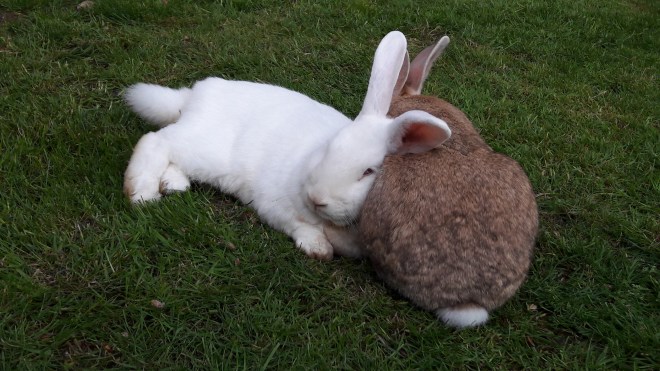
Dobby & Hazel are going for their RHD2 vaccination later this week.


References & further reading:

Rabbit Welfare Association & Fund FAQs on Filivac http://www.rabbitwelfare.co.uk/pdfs/RVHD2FAQv2July2-16FINALOWNERS.doc

Frances Harcourt-Brown: About rabbit haemorragic disease and its variants (lagoviruses) –    www.harcourt-brown.co.uk/articles/infectious-disease/rabbit-haemorrhagic-disease

The British Rabbit Council factsheet: http://www.thebrc.org/Facts%20Sheet%20RHD-2.pdf

Nobivac Myxo-RHD http://www.msd-animal-health.co.uk/products_public/nobivac-myxo-rhd/010_overview.aspx

Varga, M (2014) Textbook of Rabbit Medicine, 2 edn, Elsevier.
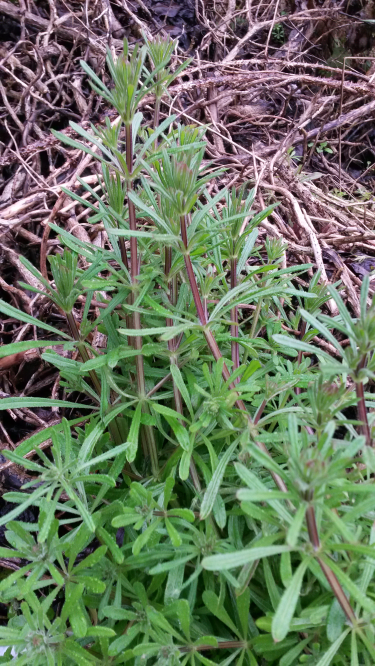
Goosegrass

Spring is definitely here! And that means lots of tasty treats for the rabbits. A firm favourite is Goosegrass (also known as Sticky Willy, Cleavers, Sticky weed and by many more names) which is just starting to grow in the hedgerows.

At school we used to enjoy picking this weed and sticking it to each others backs! But it actually makes a delicious bunny treat either freshly picked or dried.

As with all plants that you forage, please make sure you avoid areas where dogs foul and where traffic fumes are prevalent.

Goose grass.png


Fibre in pellets

If you’re a member of RWAF (and if you love rabbits you definitely should be) then you should have received the latest issue of Rabbiting On. On page 5 of this issue (Spring 2016) I discuss whether the fibre level of dry food is important, when it is fed at the recommended level.

Health problems in Lop eared rabbits

I’ve always been aware that lop eared rabbits can suffer more from health issues with regards to their teeth than ‘up eared’ rabbits but I wasn’t prepared for my vet explaining how lops were basically the ‘Pug’ of the rabbit world.

Pugs are small dogs which sadly are plagued by health issues. They have eye problems, issues with their knee caps slipping, neurological problems and like dwarf rabbits and lops they have smaller skulls and flatter faces (brachiocephalic) resulting in breathing problems. The Pug’s teeth end up overcrowded because they have the same number of teeth as other breeds but they have to fit into a smaller area. This results in plaque build-up, gum disease and infections.

Teeth

Like Pugs, Dwarf rabbit breeds and lop breeds have been bred to have a smaller rounder skull (possibly because this makes them cuter). When the skull size is reduced the upper and lower jaws do not always scale down by the same ratio. This can result in malocclusion where the teeth do not align properly, causing uneven wear and overgrown teeth.

Nose

The smaller rounder skull of the lop rabbit also means that the face is flatter and there is a shortening of the nasal passages – as seen in the Pug. Even when healthy these rabbits may make snorting or snuffling sounds, however this is not currently thought to be risk factor for respiratory problems.[1]

Ears

 Lop eared breeds have a much higher incidence of a painful condition known as otitis media[2] (infection of the middle ear). The fold in their ear stops air flowing freely, dirt can accumulate and infections are more likely to occur.  If left untreated, ear infections can then spread to the upper respiratory tract. Ear mites are also more commonly seen in lop eared rabbits.

As lop eared rabbits become older they also appear to suffer from a condition called stenosis; a narrowing of the ear canal. This can cause the canal to become clogged with detritus leading to infection and possible hearing loss[3].

After the diagnosis that my own lop had a bilateral ear infection I was advised by our exotics vet that myself and all owners of lop eared rabbits should be routinely cleaning their ears at least once a fortnight. Ear cleaning is quite easy once your vet has shown you how to do this.

Conclusion

To conclude, if you are looking at getting (or already have) a lop eared rabbit be prepared for possible health issues relating to the teeth, ears and nose. Controversially, we should be asking whether it is ethically right to breed from lop eared rabbits at all.

CT scan right ear

References:

[1] Richardson, V (2000) Rabbits. Health, Husbandry & Diseases, Oxford: Blackwell Science Ltd.

[2] Eatwell, K. (2012). Approach to Ear and Nose Diseases in Rabbits. [PDF] Webinar Club, p.Exotics Club recordings 2012. Available at http://veterinarywebinars.com/assets/Study_Notes_Ear_Nose_Rabbits.pdf [Accessed 30 Dec. 2014].

[3] Lennox, A.M (January 2010) ‘Care of the Geriatric Rabbit’Veterinary Clinics of North America: Exotic Animal Practice,, 13(1), pp. 123-133.

Easy Bonding

Despite the title, this is not a Fifty Shades of Grey blog post!

Owners will know that despite rabbits being sociable animals, introducing them to each other (bonding) needs to be done carefully. If bonding goes wrong you can end up with injured and stressed rabbits rather the loving pair or group you’d hoped for.

Bonding is therefore often attempted with great trepidation from owners, me included. However, being fully prepared before you introduce rabbits helps a great deal. As does knowing the ‘personality’ of the bunnies involved.

Never attempt to introduce rabbits unless:

a)      Both rabbits are neutered, no matter what sex they are

b)      You introduce the rabbits on neutral territory (where neither rabbit has been before)

I’ve just bonded Hazel and my new rabbit Dobby (he’s gorgeous!). Hazel lost her partner George about 6 weeks ago and I gave her this time to come to terms with his loss. She’s a very timid rabbit and I was fairly confident that she would not ‘fight’ Dobby and things would be fairly easy. I was right. Dobby mounted Hazel a few times during the first five minutes (this is totally normal but you should intervene if the male tries to mount the wrong way around as his genitals can get bitten) and she was so scared she just froze. She nipped him a couple of times but soon learnt that if she hopped away he wouldn’t chase her. They’re both very greedy rabbits so lots of tasty food was put into the bonding pen with them and they quite quickly started eating together. This progressed to lying near each other, then lying next to each other and grooming.

All in all, it has been the easiest and least stressful bond I’ve ever done! However, it will take several months to fully be sure they are happy. In the meantime I’ve washed down Hazel’s shed and run with a 50:50 water and white vinegar solution to neutralise any smells and once it’s dry they will go to their permanent home (about 5 days after starting the bond).

20160203_074608

Hazel (brown) and Dobby (white)

Losing a pet

I don’t think I fully understood the term heartbroken until the death of my first dog, Spencer. He wasn’t even 9 years old when he was diagnosed with a carcinoma in his throat – too close to his jugular vein to be removed. A slight cough was the only original symptom and then a little choking when he ate. Diagnosed on the 3rd October 2011 and put the sleep on the 2nd of December that same year. It was so quick and he went downhill so fast. For two years it was just me and him after I split up from my ex and moved house.  He was my first dog, my ‘baby’ and losing him truly broke my heart.

Since then I’ve lost rabbits too, including most recently George in December 2015. But with George I was almost relieved when he went. Of course I was sad but he’d been through so much. If you’ve read my blog about sneezing you’ll know that he had been ill since November 2013. Since that last blog he’d started to go downhill again and I was nebulising him twice a day. Another nasal swab showed signs of Aspergillosis, a fungal infection which unless induced in laboratories it’s unheard of in pet rabbits. We had some treatment for this but it was always likely to be a secondary infection. At one point he was getting the fungal medication, anti-inflammatories, gut motility medication, Penicillin injections and I was syringe feeding him, poor thing. His ears also became infected again and I was cleaning them daily. George was such as good patient and loved his extra syringed food but it was a lot for him to deal with. We managed to get him stable and I decided that enough was enough and it was now time to make him comfortable for his remaining few weeks or months. He’d had enough investigatory procedures.

Shortly after making this decision I came home one evening to find him unable to use his hind legs properly. As soon as I saw him I knew it would be a one way trip for him to the vets. The vet was fantastic, so careful with him and very understanding. She said it was possibly a spinal tumour (nothing to do with his respiratory problems) and we had to let him go.

I’ve had George cremated and his ashes are back to scatter in the garden when the weather is a bit nicer. It’s always hard to see a pet go but I felt I waited a day or two too long with Spencer and I vowed never to do that again. I always try and remember;

‘It’s better for them to go a week too early than a day too late’

george

‘George’ April 2008 – December 2015

Water bowls or bottles?

20140504_170948-2

In 2011 a study (Tschudin et al)  was published showing that most rabbits actually prefer to drink from water bowls than from bottles and I’ve certainly found that to be true.

With all of my rabbits I’ve initially given them a choice, providing them with bottles and bowls in different areas and at different heights around their living space. However, eventually I have removed all the bottles as they just weren’t being used at all.

Unfortunately, it can be more difficult to monitor water consumption when offering bowls of water instead of bottles. Water can evaporate and bowls can get tipped over or become contaminated with hay (or even the odd poop) but I find the benefits outweigh the negatives.  The benefits of bowls over bottles are:

  • Bowls are much easier to clean!
  • Rabbits seem to prefer them and can get more water more quickly from them, useful in the summer when they need to keep hydrated.
  • Large bowls have a bigger surface area than bottles and are kept inside the shed/hutch so take longer before they freeze.
  • You can easily stop them freezing by using a Snugglesafe® microwave heat pad under the bowl. Although, ideally a properly insulated hutch/shed should stop this from happening to a bowl of water anyway.
  • Lapping water from a bowl is more natural than drinking from a bottle.
  • There is NOTHING cuter than watching a rabbit lapping at water!

Warm water

Several years ago when I collected my first rabbit as an adult owner I was advised by the rescue to offer a bowl of warm water to my new bunny once home. In my experience this does encourage drinking and I’ve since offered warm water to rabbits recovering from surgery and also to my rabbits on a cold day. It was a really useful tip.

frog in water bowl

One of the more unusual things I’ve found in their water bowl!


Reference: Tschudin, A., Clauss, M., Codron, D., Liesegang, A., Hatt, J.M. (2011) ‘Water intake in domestic rabbits (Oryctolagus cuniculus) from open dishes and nipple drinkers under different water and feeding regimes.’, Journal of animal physiology and animal nutrition,95(4), pp. 499-511.

Wild strawberries

It’s November and wild strawberry plants (Fragaria vesca) are still growing in abundance along hedgerows here in Wiltshire. Although there are no actual strawberries, my rabbits love the delicious leaves. Strawberry plants are quite hardy and can survive year to year but very cold weather will damage the leaves. It’s very mild at the moment so my rabbits are continuing to enjoy this treat a few times a week.

Wild strawberries produce white flowers between April and June. The flowers are followed by the fruit which starts off green and ripens into a red colour. Yellow ‘dots’ can be seen on the surface of the fruit which are the seeds. Wild strawberry fruits are miniature versions (about 1 cm diameter) of the strawberries you see in the shops or grow in your garden but they can also be eaten by human and rabbit alike. The plants spread across ground using runners (stolons) and they have the same characteristic shaped leaves as cultivated strawberry plants, comprising of three ‘leaflets’.

Strawberry leaves have been used in teas as traditional remedies for digestive problems and for the treatment of arthritis in people but I’ve no idea whether they would have the same benefit for rabbits!

wild strawberry

A guide to bunny poo

Rabbits produce two types of poo.  The first type are called caecotrophs and they are soft, sticky dark coloured poops (covered in mucus and sometimes with a greenish tinge). Rabbits actually eat their caecotrophs but this usually happens at night so often owners never witness this. They eat the caecotrophs straight from their anus. This type of poo is rich in nutrients and rabbits must consume them in order to remain healthy. Too many caecotrophs (often caused by a starchy/carbohydrate based diet instead of a high fibre diet) can mean the rabbit does not eat them all and they can get stuck in the fur around the anus.

The second type of rabbit poo is the type you see in their litter tray, around the garden and in fields where wild rabbits live. In comparison to caecotrophs these harder droppings are larger, rounder and much drier. They have a fibrous quality and you should see fibre particles in them. Rabbits can produce over 300 of these droppings per day!

The size, shape and amount of poo your rabbits produce can be a very useful guide into understanding how healthy they are. Problems to watch out for include:

  1. Rabbit not producing enough poo (or suddenly pooping less than usual).
  2. Small or misshapen droppings.
  3. Not eating caecotrophs (finding them in the litter tray or stuck around the anus).
  4. ‘String of pearl’ droppings (where several poops are joined together with fur).

Plentiful, large, evenly shaped, round poops are what you should be aiming for. Any deviation from this should be considered as serious and a veterinary check-up sought as soon as possible. A reduction in number, size or a change in dropping shape could mean your rabbit is not eating or the digestive system has slowed down or stopped for some reason. This can indicate illness, stress, dehydration or blockages. Some medications can also affect the digestive system this way.

Fur in the poo causing the string of pearl effect usually occurs when the rabbit (or his/her friend) is moulting. Daily brushing to remove loose fur can reduce how much fur is ingested. Carpet or fabric fibres may also be seen in the dropping so it is important to keep chewable things out of reach and regularly check household items for evidence of chewing.

Finding regular uneaten caecotrophs usually suggests that a dietary change is needed.

In this photo the first set of poops at the top are from a young, healthy female that eats a lot of hay. The middle poops are from an elderly male rabbit that is on a lot of medication. Veterinary advice was sought on this. These poops are NOT normal and this should be investigated by a vet ASAP. The bottom poops are also from an elderly male rabbit who has no known health issues but has been on a poor diet up until the last few months. His digestive system is gradually getting better and the hope is that he will also produce larger poops soon!

In this photo the first set of poops at the top are from a young, healthy female that eats a lot of hay.
The middle poops are from an elderly male rabbit that is on a lot of medication. Veterinary advice was sought on this. These poops are NOT normal and this should be investigated by a vet ASAP.
The bottom poops are also from an elderly male rabbit who has no known health issues but has been on a poor diet up until the last few months. His digestive system is gradually getting better and the hope is that he will also produce larger poops soon!

Uneaten caecotrophs

Uneaten caecotrophs

Bonding a trio of rabbits

Rabbits love company. But they are fussy about what friends they keep and fights (causing severe injuries) can break out if you don’t introduce rabbits properly. This introduction is known as bonding. There are many different methods and techniques used to bond rabbits. This is just how I did it. However, there are three golden rules to any bond:

  1. All rabbits – yes both males and females MUST be neutered. Castrating the male only will stop unwanted pregnancies but hormonal, territorial females can be very angry and they usually need to be neutered too for a bond to be successful.
  2. Introductions must be done on neutral territory (somewhere neither rabbit has been).
  3. Be prepared!

My book ‘Bonding Rabbits’ explains how I bonded my very first pair. However, today I’m going to talk about bonding a trio. This is only the second attempt I had at a trio (the first was also a success). It should be noted that, if you already had a neutered pair which have a close relationship, you should think very carefully before adding a third rabbit. The introduction of the third can sometimes upset the current pair and may even cause the original bond to break down. I already had a pair; George (neutered male) and Hazel (neutered female). However, the relationship was not as close as I’d seen in some of my previous bunnies and George could be a bit of a bully towards Hazel. I decided to try adding in another rabbit to see if this would change and improve the dynamics of the group. I could have chosen a male or a female. At this point it is the personality that matters most (whereas a male-female pair is best when bonding two rabbits). I decided on a neutered female (Daisy).

STEP 1. Preparation. Before bonding I made sure I was fully prepared. I’ve learnt from experience to have everything ready BEFORE you put the rabbits together. It is much less stressful. So a bonding run is prepared – not too big or rabbits can sit in corners and make the corners their ‘territory’ and not too small so they can’t sit apart either. To start with, no litter trays or toys or anything that may smell of one or another rabbit and again the reason for no trays initially is so no-one can claim territory. No water bowl for first 30 mins so it doesn’t get knocked flying in the initial fighting chasing but you can put a few bottles around the pen. Big gloves at the ready in case you need to separate fighting buns. I have big welding gloves that I use for messing around with the fire so they can’t bite through them. And a water sprayer – some people don’t advocate this (as it is not very pleasant for the rabbit) but it can be useful to squirt a bit of water in the face of a rabbit which seems to be repeatedly starting scuffles. It stops them in their tracks and makes them stop and groom their face which is a calming behaviour. The timing of the squirt of water must be exact for this to work. If unsure – don’t use it. And the ‘squirt’ should be a light spray/mist from the same sort of bottle as you would mist plants with (clean and unused obviously). I did not need to use the sprayer when bonding this trio.

My bonding pen is usually in the livingroom (neutral territory). I put newspapers down to protect the floor but I prefer it in the lounge because I can watch TV and keep an eye on them. Also if the bonding seems to be taking a while, I can choose to sleep on the sofa next to them in case a fight starts. For this reason you should always leave yourself a spare weekend to bond rabbits. It cannot be done in a rush.

The bonding pen

The bonding pen

STEP 2. Car journey. I got my husband to drive the car and I sat in the back. I put my pair in an open topped cardboard box and after starting the 10 minute journey I popped the single bunny in. You don’t have to do this stage you can go straight to the bonding pen but my personal previous experience shows this works really well. The bunnies don’t like the car much and huddle down – the third bunny then huddles into the pair. A few minutes is enough. For very nervous or elderly rabbits this step (known by some as stressing) is probably not suitable.

STEP 3. The bonding pen. Put all three rabbits into the pen, get the gloves on and stand by. Some chasing, fur-pulling, humping, nipping and ignoring is normal. But full on fighting (eyes shut, kicking, rolling around together biting) is a very bad sign and rabbits should be separated immediately.

Initial meeting between Daisy (white & grey), George (Brown lop) and Hazel.

Initial meeting between Daisy (white & grey), George (Brown lop) and Hazel.

After a while they settled down and George and Hazel ignored Daisy.

After a while they settled down and George and Hazel ignored Daisy.

As things progressed i added in a litter tray, more hay and a water bowl and Daisy squeezed herself in between George and Hazel.

As things progressed I added in a litter tray, more hay and a water bowl and Daisy squeezed herself in between George and Hazel.

Eating together is a very good sign that things are going well.

Eating together is a very good sign that things are going well.

The Outcome Introducing Daisy to George and Hazel was my easiest bond yet! I think by being prepared for the worst it made things seem very easy. There were some initial scuffles. Chasing and fur nipping but only by the new-comer Daisy and George my existing male. Poor Hazel just hid in the corner and froze but after a few hours the three of them were soon eating and lying together. One and a half years on and they are all still great together.