By now, most of us have likely heard about the gut-brain axis and the growing body of research into the gut microbiome – the ecosystem of bacteria, viruses, and other microbes that inhabit our gastrointestinal system. I even covered this in a recent video.
Current research has been exploring how the microbes in the gut (and the substances they produce – known as metabolites) can influence overall health. Studies have shown that the diversity and richness of gut microorganisms can differ in conditions, including obesity, anxiety, depression, gastrointestinal and immune conditions, and many more. We also know that factors such as diet, environment, age, sex, and genetics can all impact the gut microbiome.
It’s also believed that gut microbiome changes take time, which is one reason why nutritionists like myself recommend introducing new diets to our pets gradually over several days.
Until recently, microbiome research has focused on how the gut affects the brain. However, a new study published in the peer-reviewed journal ‘Nature Metabolism’ has shown that the brain can, in turn, influence the composition of gut bacteria, increasing or decreasing certain bacterial families in mice within just 2 to 4 hours.
Like most research, the study has some limitations, and this is just one piece of research in an area that should be explored further. However, it throws up some interesting considerations, such as the importance of mood and brain function when assessing the gut microbiome and how testing may only provide us with a snapshot in time.
Today, the front page of The Guardian is about a recent study published by the British Medical Journal (Lane et al., 2024), which discusses the effects of ultra-processed food on human health.
The study shows associations between the consumption of ultra-processed foods and conditions such as heart disease, diabetes, mental health and mortality. The findings indicate that the more exposure you have to these ultra-processed foods, the higher your risk of developing these conditions.
What is an ultra-processed food?
The study describes ultra-processed foods as ready-to-eat products, snacks, fizzy drinks and ready meals.
Is dry and wet pet food ultra-processed?
Yes, and No. Anything that changes a whole food from its natural state is classed as a process. So even raw food has some processing. Processing can include cooking, cold-pressing, pasteurisation, dehydration, or freezing. However, ultra-processed food can also contain additives, preservatives, mould inhibitors, flavourings, and texture changes (thickening agents for example). They may also contain ingredients with poor nutrient profiles, i.e., foods high in fat and sugars or low in fibre.
However, human foods such as buns, sweet or savoury packaged snacks, fatty foods, confectionery, desserts, sodas and sweetened drinks are all in essence, ‘junk foods’ and do not resemble complete dog foods. In addition, it is now relatively easy to find a complete commercial dog food that is low fat, sugar-free with no colourings, and either preserved by sealing in an air-tight container or naturally preserved using tocopherols (vitamin E) or rosemary oil extract. Many pet foods are also complete, so they are very different from eating a chocolate bar. If they are complete and balanced, they contain added vitamins and minerals, something not found in ultra-processed food for humans.
Is there a link between processed dog foods and health problems?
Currently, insufficient research exists to draw any conclusions. While a 2021 study by Hemida et al. suggests potential benefits of raw diets for dogs compared to what the authors referred to as ‘ultra-processed’ dry dog food, limitations of the research include reliance on owner-reported data (which can be unreliable and prone to recall bias), and funding provided by a raw food company. Additionally, the authors were unable to study the nutrient profiles of the foods, which is important as commercially cooked foods can vary significantly in ingredient quality and quantity. Moreover, the study examined ideal body conditions alongside diet adjustments, which suggests a possible link between lean body weight and improvements in canine health rather than solely diet influences.
Is all processing bad?
Not at all. Cooking and other processing methods can help make foods safe to eat. For example, cooking kills bacteria and can improve the taste and digestibility of many ingredients. Oba et al., (2019), showed that lightly steamed chicken is more digestible than raw chicken.
In addition, a study from 2023 (Chen et al.) observing ultra-processed food and diabetes in humans found that cereals, whole-grain bread and some fruit and dairy-based processed foods were associated with a lower risk of type 2 diabetes, potentially because of mediation by fibre, compared with refined bread, sauces, condiments, sugary and sweetened foods that increased the risk.
Should I feed home-prepared whole foods?
Several studies analysing hundreds of recipes (as reported on this page previously) have shown that home-cooked or homemade raw diets for dogs and cats are nearly all deficient in at least one nutrient. A better option for a less processed but nutritionally balanced diet is to feed a complete fresh or gently cooked dog food. Complete foods contain all the correct levels and ratios of vitamins and minerals your dog requires.
I’m unable to feed a complete fresh or raw food diet
As discussed, ultra-processed human foods are not the same as complete pet foods, and there is no research to show that processed pet foods are bad for dogs. In addition, the life expectancy of dogs has increased over the last few years rather than declined (Montoya et al., 2022). However, if you feel guilty about not feeding your pooch on a fresh diet, why not swap in some fresh whole foods a few times a week? You can give a home-cooked meal one or two days a week, or you can add daily amounts of fresh green, bright coloured or root vegetables or fruit to your dog’s complete diet.
Chen, Z., Khandpur, N., Desjardins, C., Wang, L., Monteiro, C.A., Rossato, S.L., Fung, T.T., Manson, J.E., Willett, W.C., Rimm, E.B., Hu, F.B., Sun, Q. & Drouin-Chartier, J. 2023, “Ultra-Processed Food Consumption and Risk of Type 2 Diabetes: Three Large Prospective U.S. Cohort Studies”, Diabetes care, vol. 46, no. 7, pp. 1335-1344.
Lane M M, Gamage E, Du S, Ashtree D N, McGuinness A J, Gauci S et al. Ultra-processed food exposure and adverse health outcomes: umbrella review of epidemiological meta-analyses BMJ 2024; 384 :e077310 doi:10.1136/bmj-2023-077310
Hemida, M., Vuori, K.A., Moore, R., Anturaniemi, J. & Hielm-Björkman, A. (2021), ‘Early Life Modifiable Exposures and Their Association With Owner Reported Inflammatory Bowel Disease Symptoms in Adult Dogs’, Frontiers in veterinary science, vol. 8, pp. 552350.
Montoya, M., Morrison, J.A., Arrignon, F., Spofford, N., Charles, H., Hours, M. & Biourge, V. 2023, “Life expectancy tables for dogs and cats derived from clinical data”, Frontiers in veterinary science, vol. 10, pp. 1082102-1082102.
Oba, P.M., Utterback, P.L., Parsons, C.M., de Godoy, Maria R C & Swanson, K.S. (2019), ‘Chemical composition, true nutrient digestibility, and true metabolizable energy of chicken-based ingredients differing by processing method using the precision-fed cecectomized rooster assay1’, Journal of animal science, vol. 97, no. 3, pp. 998-1009.
Grain free diets have been increasing in popularity over the last decade, but is there a reason we should not feed grains to our dogs and are grain free diets healthy?
What are grains?
Grains, sometimes called cereals, are the edible seeds of grasses belonging to a family called Poaceae. They include: Rice, Oats, Wheat, Barley, Maize (also known as corn), Rye, Sorghum and Millet (of which there are several species).
Pseudo-grains are the edible seeds from other plant families. They are nutritionally similar to grains and can be used as alternatives to true grains: Amaranth, Quinoa, Buckwheat.
Are grain free diets more natural for dogs?
If you are feeding your dog a grain free dried dog food, then the manufacturer will have to replace the grain with another carbohydrate. There are a few reasons for this. Firstly, dry diets need at least a small amount of carbohydrate in them to form the structure of the kibble, secondly meat/fish is expensive and most (but not all) carbohydrate sources are cheaper than meat. Thirdly, if the diet was majority meat or fish it may end up being far too high in fat and calories and too low in fibre. We already have an obesity crisis in the UK with nearly 50% of all dogs being classed as overweight. Therefore, grains are usually replaced with potato, sweet potato, or legumes. Is eating a potato more natural for a dog than eating rice?
Have dogs evolved to eat grains?
The theory behind many ancestral diets for dogs is that they have not evolved since their days living as wolves. However, dogs evolved from wolves 1000’s of years ago (the exact date is argued amongst scientists with estimates between 10,000 to 30,000 years ago). When we look at them, we can see they have evolved, a good starting place is comparing the chihuahua with the wolf. Dogs have floppy ears, smaller heads, and paws than wolves and through selective breeding humans have caused further changes in their physical features (not always to the benefit of their health). So, if their physical appearance has drastically changed, why would their digestive system not have evolved too?
Dogs have different genes than wolves when it comes to digesting starch (carbohydrate). Dogs have more copies of a gene called AMY2B. This gene is for amylase, the enzyme responsible for digesting starch. Wolves have 2 copies and dogs have between 4 to 30 copies. Interestingly, different breeds of dogs have different numbers of this gene, so there could be some dogs able to digest starch better than others. The same study showed that this gene is 28 times more active in the dog’s pancreas than in wolves. There also changes in the gene MGAM responsible for helping conversion of maltose into glucose. Dogs and wolves have the same number of copies of this gene but there are mutations in the dog genes leading to a 2 fold increase in the maltose to glucose turnover in dogs and 12 times more enzyme activity in the dogs pancreas. There are also differences between dogs and wolves regarding the gene SGLT1, which is used for the transport of glucose (Arendt et al, 2014).
This genetic evidence is supported by feeding trials. In one such study researchers measured the weight and consistency of faeces from dogs fed on oat groats, rice, wheat, barley, and corn to determine digestibility. They also looked at blood sugar levels after eating. It showed that dogs are highly efficient at digesting grains with rice being the most easily digested, followed by oats (Kempe et al, 2004).
Do grains cause allergies in dogs?
Despite there being a lot of talk around this subject, the science does not support the theory that a huge number of dogs are allergic to grains. In fact, only 5% of skin conditions and only 20% of skin and digestive problems in dogs and cats are a result of an adverse reaction to food (Olivry and Mueller, 2017 and 2018). Furthermore, some of these adverse food reactions (AFRs) are food intolerances not allergies. For more info click here.
A 2016 review (Mueller et al, 2016) of several studies on skin disease as a result of an adverse food reaction showed that the most common AFRs in dogs are to beef, wheat, dairy, chicken and lamb.
Prior to this, another review showed that most common food allergens in dogs were beef, cow’s milk and wheat (Hand et al, 2010).
Apart from wheat, grain allergies are not commonly associated with food allergies in cats and dogs.
Are grain free diets healthier than diets containing grains?
This really depends on the balance of the entire food. Healthy nutrition cannot be determined from one ingredient alone. Other considerations include (but are not limited to) fibre type and level, fat content, quality of protein and balance of minerals.
However, in the last year or two there have been some concerns about grain free diets. After over 500 reports between 2014 and 2019, the FDA (US Food and Drug Administration) and several veterinary teams have started investigating a potential link between grain free diets and heart disease, more specifically Dilated Cardiomyopathy (DCM). Veterinary cardiologists are reporting an increase in DCM, not only in breeds that DCM commonly affects (Boxers, Dobermans, Great Danes, Cocker Spaniels) but also in smaller breeds where it is not common. When the affected dogs are changed off the grain free diets, they improve. However, it is unclear if it is the absence of grains that is the issue or the use of large amounts of potatoes, lentils, peas, chickpeas instead. These diets also seem to have novel sources of protein (such as kangaroo) and the addition of less common fruits and vegetables, some even have small amounts of grains. Research is on-going with this.
I want to feed a gluten free diet, can I still feed grains?
Some dogs may react adversely to the gluten. For example, owners of Border Terriers with Canine Epileptoid Cramping Syndrome, also known as Spike’s Disease seem to be particularly sensitive to gluten (Lowrie, 2015) and a wheat-gluten enteropathy has been identified in Irish Setters, as well as being suspected in other breeds.
The good news is that rice, maize (corn), sorghum and millet are all gluten free grains. Interestingly, although oats contain gluten, many human coeliacs (people that have an autoimmune reaction to gluten) can tolerate oats and the same seems to be true for some dogs. Another option would be dog foods containing pseudo-grains, as these are naturally gluten free.
And Finally
Having said all this, there are some superb grain free diets out there and if your dog has an adverse food reaction and you cannot pinpoint what’s causing it, a grain free diet with a single source of protein can be a great place to start. The point of this blog is to get us out of the mindset that grains are all bad, after all vets have been recommending a highly digestible meal of cooked chicken and rice for upset dog tummies for years.
References & Further Reading
Arendt, Maja et al. “Amylase activity is associated with AMY2B copy numbers in dog: implications for dog domestication, diet and diabetes.” Animal genetics vol. 45,5 (2014): 716-22.
Axelsson, E., Ratnakumar, A., Arendt, M. et al. The genomic signature of dog domestication reveals adaptation to a starch-rich diet. Nature 495, 360–364 (2013).
Kempe, Riitta & Saastamoinen, Markku & Hyyppä, Seppo & Smeds, Kurt. (2004). Composition, digestibility and nutritive value of cereals for dogs. Agricultural and Food Science. 13. 5-17.
Lowrie M et al (2015). The clinical and serological effect of a gluten-free diet in border terriers with canine epileptoid cramping syndrome, Journal of Veterinary Internal Medicine 29(6): 1,564-1,568.
Mueller RS, Olivry T. Critically appraised topic on adverse food reactions of companion animals (6): prevalence of noncutaneous manifestations of adverse food reactions in dogs and cats. BMC Vet Res. 2018;14(1):341.
Mueller RS, Olivry T and Prélaud P (2016). Critically appraised topic on adverse food reactions of companion animals (2): common food allergen sources in dogs and cats, BMC Vet Res 12: 9.
Olivry, T., & Mueller, R. S. (2017). Critically appraised topic on adverse food reactions of companion animals (3): prevalence of cutaneous adverse food reactions in dogs and cats. BMC veterinary research, 13(1), 51.
Watson, T (2011) Breaking it down – measuring food quality and digestibility. Vet Times. 28 February 2011.
I don’t know who coined the term ‘silent killer’ but it’s an unfortunately accurate description of this problem. It’s not being overly dramatic to state that gastric stasis can kill a rabbit in a matter of hours. Gastric stasis occurs when normal gut motility (movement) slows down or stops. It’s best to think of the rabbit digestive system like a conveyor belt, it must keep moving for them to survive. It stops moving if the rabbit stops eating and/or stops producing poo.
Gastric stasis (or GI stasis) is not a disease itself, it is a secondary problem that is caused by something else – such as pain, disease, digestive blockage or bloating, poor diet or stress. Feeding a diet which is deficient in long fibre particles (i.e. a diet high in dry food with not enough hay and grass) can slow down the digestive system. Fibre is also required to push fur that has been ingested when grooming through the system.
The problem is that the symptoms can be very subtle, and it doesn’t take long for the condition to escalate from serious to life threatening.
Back in the summer, one morning as usual, I went out to the shed to feed and check on my rabbits Dobby and Hazel. Instead of running to greet me (to check what food I had) Dobby just stayed sitting where he was and only Hazel ran forward. This immediately set off alarm bells with me. Dobby is incredibly greedy and this was not normal. I picked him up and checked him over, I couldn’t see anything wrong. I put him back down and instead of hopping around he just hunched himself back up into a ball again and looked very uncomfortable. I tried to get him to move a little and he did a bit of stretching but he just looked ‘off’. With another animal such as a dog or a cat, you might leave them a little while to see if they feel better later but with rabbits every minute counts. I’m lucky enough to work at a veterinary practice and was on my way to work, so I took them with me.
Dobby with his bandage where the intravenous catheter had been placed.
The short version of this story is that Dobby ended up being admitted to the specialist exotics veterinary hospital and was in there for 4 days. He was given painkillers, prebiotics and drugs to get his gut moving again (once he was checked for blockages). He had blood tests, urine tests and his teeth checked (as tooth pain can be one reason for refusing to eat). He was syringe fed and put on fluids as he was beginning to become dehydrated. After 4 days he started eating by himself and pooing properly again and was cleared to come back home. However, we are none the wiser regarding what started the problem, I just know that had I have left him he would have died. Both rabbits were moulting heavily, and I wondered if he had eaten too much fur when grooming but no blockage was found. The vets could find nothing wrong with him and his routine the night before had been normal, with no stress or routine change I can think of.
So, I guess the take home messages from this experience are:
If you think your rabbit isn’t quite themselves, acting slightly different, lethargic or not eating as much or pooing normally – get them to the vet immediately. You can’t afford to wait until the next day.
Get pet insurance! I am extremely grateful I have insurance for him as the whole episode was over £1000 and I only had to pay an excess of £55. Phew!
If you have a bonded pair of rabbits always take them to the vet together. I now have personal experience of what a disaster it can be if you don’t follow this advice. (see my next blog!).
PS. as a weird side note Dobby has ‘uppy’ ears and has never been a lop eared rabbit. When I went to pick him up from the vets I had to check they had given me the right rabbit as both his ears were hanging down! I think the weight of the IV catheters into his ears caused them to bend. It took about a month in total for them to fully right themselves!
Dobby with his new ‘lop’ ears after returning from the vet.
Socialisation is a term usually used to describe a period of learning (up to 14- 16 weeks old) that puppies go through. During this period they learn how to properly interact with other animals and humans as well as experiencing different situations, objects and environments. Dogs that have not been properly socialised during this period can grow up to be fearful, anxious and potentially aggressive. During this socialisation period there is also a fear imprint period (also known as a sensitive period) and any negative or scary experiences during this time can have a lasting effect on the puppy. Interestingly, the age of onset of this period is different between breeds, with Labradors not starting the fear imprint period until 72 days old compared to German Shepherds at 39 days old. This could explain differences between breeds and their ability to deal with new situations or environments when older.
A socialisation period has also been discovered in kittens but is thought to be between 2-7 weeks old. This means that the breeder or rescue centre will have the sole responsibility of ensuring the kitten is exposed to as many new stimuli as possible during this period to ensure they make friendly, confident pets before they go to their new home.
Socialisation in rabbits
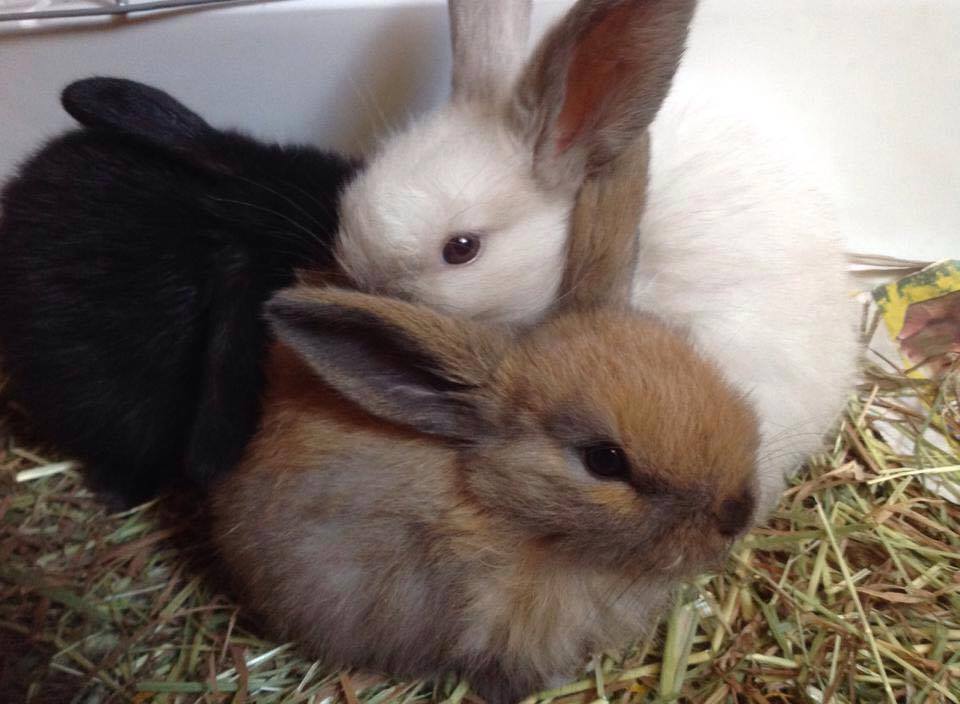
What about rabbits? There is a wealth of information about puppies and socialisation, a little about cats and even less about rabbits, however if we are to try and prevent the large number of rabbits being given up to rescue centres this is something that we should be focusing on. A properly socialised baby rabbit, that is used to humans handling them is much more likely to go on to become a more relaxed and friendly pet. According to Dr. Dyles (2006) the socialisation period in rabbits is between 10-21 days old and to ensure baby bunnies grow into tame, friendly and confident adults they must be handled before they are 21 days old (but it is also important for handling to continue regularly after this age). This means that breeders (and rescue centre staff) have the responsibility of making sure the rabbits they sell or put up for adoption are accustomed to being picked up and handled. If you are considering getting a rabbit from a breeder this is something you should ask – how much handling have they had? Along with what are the temperaments of the parents? Are they placid, friendly parents? Ask to meet them to see for yourself.
Baby bunnies that have not been handled when young are more likely to fear humans and may grow into timid, frightened adults. This fear can escalate into aggression, especially if they learn that biting or lunging makes the scary thing (perhaps a human hand) go away. Behaviours like this are just one reason rabbits become neglected or given to a rescue centre. Preventing this scenario from happening in the first place is the best option.
Photo credit – Thanks to Jayne Bethan Townsend; Friends of Animals Wales.
Habituation in rabbits
If, however you already have an adult rabbit that is fearful or aggressive (which is usually due to fear) it is still possible that they may be taught to become less anxious. This is usually through the process habituation. Habituation occurs when the rabbit is exposed to the stimulus enough times that it eventually gets used to it and stops reacting. For example, with enough time and patience, a rabbit that shrinks away every time you put your hand towards may start to realise that nothing bad is going to happen and instead of shrinking away they may stay still, eventually they may even let you stroke them and finally may offer their head for stroking. For this to work, an owner must be patient and move slowly so as not to startle the rabbit. This process may take weeks, months or longer and all interactions should be made as positive as possible, using a tasty treat may help or you may find that speaking to them calmly and quietly helps. If you proceed too fast it could scare the rabbit and make matters worse.
If you have an aggressive rabbit the Rabbit Welfare Association and Fund have a great leaflet called Biting the Hand that Feeds. However, if more people are made aware that rabbits, like dogs, also have a socialisation ‘window’ this may help to prevent behavioural problems later in life – resulting in happier rabbits and owners.
Photo credit – Thanks to Jayne Bethan Townsend; Friends of Animals Wales.
During the last few months of my rabbit George’s life he became very thin. Increasing the number of dry pellets often gave him an upset stomach and his partner bunny Hazel, who was younger would eat quicker, often eating a bigger share of the calorific food. This meant that maintaining a healthy body weight for George was difficult and consequently Hazel became quite overweight. Not only was she eating more but it was winter so she was less active (she digs a lot in the spring and summer) and because George was poorly and less active she tended to sit with him to keep him company. I resorted to hand feeding George to prevent her getting fatter.
Hazel had physically changed shape and was ‘rounder’ so I could see she was too heavy, however, once George passed away I could control Hazel’s diet to help her lose the weight she gained. If you want to check your own bunnies weight then check out the PFMA rabbit size-o-meter here. A rabbit is classed as being overweight if they carry 10-20% more body weight than they should for their size. If they weigh 20% more than they should then they are classed as obese. It can be hard to tell what their ideal weight should be, especially if they are a crossbreed so a body condition chart is a great guide to identify their weight.
Why is being overweight a problem?
Obesity has been linked to many health conditions such as heart disease and arthritis. Being overweight causes the heart to work harder and puts pressure on the joints causing extra pain in individuals already suffering arthritis. In dogs, studies have shown that being even moderately overweight can shorten their lifespan by up to 2 years and although there are no longevity studies in rabbits there is little doubt that obesity affects quality of life and more than likely lifespan too. There are many other issues associated with being overweight:
Overweight rabbits are more likely to suffer from pododermatitis (sore hocks), a painful condition of the feet.
Overweight rabbits cannot reach their anus to eat caecotrophs. If they cannot eat these ‘night faeces’ to get important nutrients they can develop life threatening digestive problems.
Overweight rabbits are more prone to developing cystitis and sludgy urine (Varga, 2014).
Overweight rabbits are more likely than those rabbits of an ideal weight to suffer from a fatal liver disease (hepatic lipidosis) should they be fasted or become anorexic for any reason.
Why are rabbits overweight?
Pet obesity has been in the news quite a lot over the last couple of years with the most common figure being quoted of a third of UK pets are overweight. However, last year Marsden, supplier of veterinary weighing scales did their own survey of over 2500 vet practices and found that 58% of pets are overweight – more than half! Yet only 16% owners believe their pet is overweight (PDSA, 2016). One possible reason for the huge discrepancy between overweight pets and owners being able to identify weight problems is that there are now so many fat pets that we may have lost sight of what is ‘normal’.
The 2016 PDSA Animal Wellbeing Report highlighted many reasons that rabbits (and other pets could be overweight), for example owners tend to feed treats and extra food for a variety of reasons including to make up for feeling guilty for the lack of exercise their pet gets. The study also showed that many rabbit owners are still not feeding the recommended diet of 80% hay and grass, 15% greens and 5% dry food. Only 68% of owners feed hay and for many of these rabbits hay was not available 24 hours a day, as it should be. 24% owners were still feeding muesli style dry food which is generally lower in fibre and higher in calories than pellets and promotes selective feeding (rabbits tend to pick out the higher calorie bits like the flaked peas). Studies into rabbit nutrition support this claim that muesli should be avoided, for example Prebble et al (2014) found that rabbits fed ad-lib muesli food became obese when compared to rabbits fed muesli with hay, pellets with hay or just hay. The best body score was for the 4th group that were just fed hay but the study did not examine if the rabbits fed hay only suffered any nutrition deficiencies (Mancinelli, 2016).
Helping your rabbit lose weight
It can be difficult to get your rabbit to lose weight once they have put it on. However, fine-tuning the diet and encouraging exercise is the best way to do this. Keep in touch with your you vet or vet nurse so you can monitor progress and ensure the rate of weight loss is safe. Many practices now offer free weight clinics.
You can encourage exercise by:
Providing a run that is permanently attached to the hutch so your rabbit has access to it 24 hours a day.
Hide food around the run or hutch for your rabbit to forage for.
Hang food from the roof of the run or ceiling so your rabbit has to stretch to get it.
Use feeding toys or balls to encourage your rabbit to move and work for his/her food.
You can change the diet by:
Increasing the amount of hay you offer and cut down on the dry food.
Cut out the dry food completely if you are able to and instead offer a variety of vegetables/herbs or wild plants daily to ensure your rabbit is getting a balanced diet.
Change to a high fibre, low calorie monocomponent dry food such as FibaFirst by Supreme.
Avoid high sugar vegetables such as carrots and do not feed fruit.
Cut out sugary, high calorie treats and chews from the pet shop e.g. seed bars and yogurt drops.
Hay is essential for dental health, digestive function and preventing obesity
Prebble JL, Shaw DJ and Meredith AL (2014). Bodyweight and body condition score in rabbits on four feeding regimes, Journal of Small Animal Practice56(3) 207-212.
This blog is a little late in the year as usually I would suggest collecting plants before the autumn starts when wild foliage is most abundant and high in nutrients. However, there are still several plants available, including plantain, that you could gather for drying and feeding during the winter.
The ideal rabbit diet consists of approximately 80% hay & grass, 15% greens (this can be vegetables, wild plants or herbs) and 5 % dry food (i.e. pellets). I have personally found that feeding wild plants to my rabbits instead of cultivated vegetables such as spring greens, cabbage, broccoli etc. suits their digestive system better, but it is far more difficult to forage in the winter due to the lack of vegetation. By drying weeds and herbs you can continue to feed natural, wild plants throughout the winter.
Herbs and wild plants that air dry best are the ones with a low moisture content such as rosemary, thyme, oregano and sage. Wild plants such as ribwort plantain, blackberry (brambles), goose grass and even nettles can be dried quite easily. Below is a photo of some plantain and yarrow hanging from the roof of my rabbit shed.
How to dry plants:
Step 1. Pick your herbs or wild plants (forage) when they are dry. So ideally after a couple of dry days and after any morning dew has evaporated. Wet herbs & plants are more likely to go mouldy.
Step 2. Remove any insects!
Step 3. Sort into bunches of 5-10 stems and tie the ends together with string.
Step 4. Hang upside down in a warm, well ventilated area with plenty of air flow and allow to dry. A warm shed is ideal. You can also spread your forage out along wooden shelves to dry.
Step 5. Check (and turn if using a drying shelf) your forage frequently and remove any parts with signs of mould.
Step 6. It may take several days for your forage to be completely dry. Once dry, seal in air tight bags or containers.
Step 7. When opening your container check visually for any signs of mould or insect infestation. Do not feed if you spot mould or the forage smells musty.
By drying plants you can supply your rabbits or guinea pigs with tasty, healthy food throughout winter.
However, if you’ve not had time to gather and dry anything this year you can buy dried forage for winter feeding from several sources. The Hay Experts sell a variety of dried herbs as does Burns Pet Nutrition and Galens Garden.
B&M stores are also selling dry herbs at the moment for quite a good price, I don’t know how long stocks will last though so it might be worth a visit soon. Have fun drying!
Apparently, there is a heat wave coming to the UK next week. The forecasts are estimating that it will be as high as 30 degrees C… for at least a day anyway!
I’m making sure I’m prepared for the hot weather so that my rabbits, Dobby and Hazel can keep as cool and comfortable as possible.
In the wild, the underground burrows that rabbits live in stay at a fairly constant temperature, remaining cool in the summer, warm in the winter and free of draughts. However, above ground rabbits are exposed to much larger fluctuations in temperature and they can struggle to tolerate hot weather.
Rabbits cannot sweat or pant to lose weight like humans and other animals. Instead, they use their large ears to dissipate heat.
There are several ways you can keep your rabbits cool:
It sounds obvious but make sure you provide plenty of shade and ensure that as the sun moves there will be shade no matter what time of day it is. I use old linen sheets or old shower curtains but parasols and boxes or hiding places inside the run would also be suitable. It’s important that you don’t restrict airflow to the run or hutch when you put up sheets for shade.
Keep your rabbits well groomed. A thick coat will help them retain heat, furthermore brushing out dead hair and making sure that there are no mats in the coat helps air flow to circulate around the skin.
Hutches can get very hot. Sadly, earlier this year there were reports of guinea pigs and rabbits dying in their hutches due to the heat. These hutches had their waterproof covers over them, reducing ventilation and trapping heat like a greenhouse. Move hutches into the shade and remove plastic covers to increase air flow.
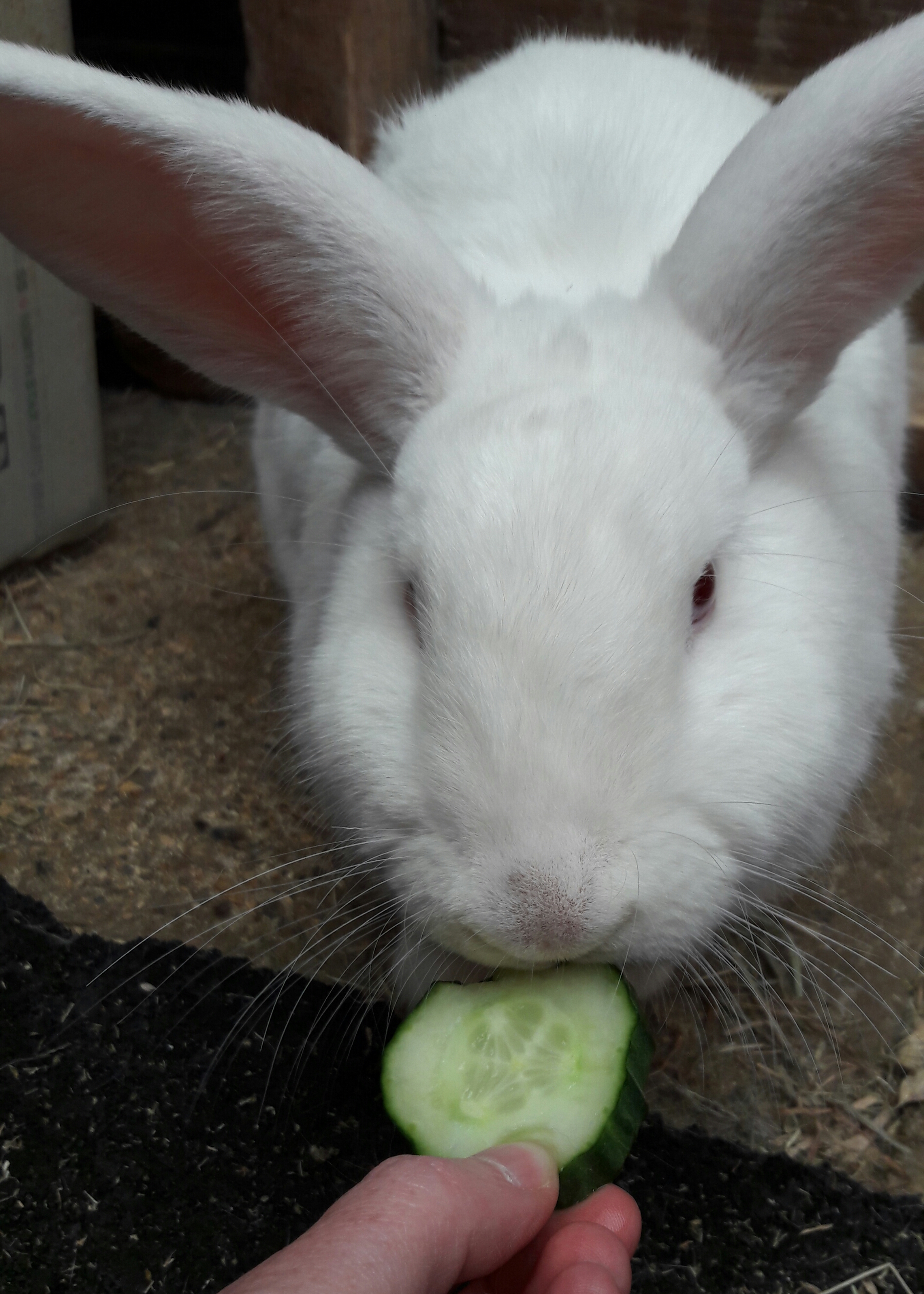
I encourage water consumption by offering foods with a higher liquid content such as cucumber. You can also spray their veggies/greens with cool water before feeding too.
Get with the science and try evaporative cooling! In humans, we keep cool as our sweat evaporates. This is because heat is used to turn water (sweat) from liquid into water vapour. You can use a cool damp cloth or plant mist sprayer (previously unused, you don’t want any chemical residue) to wet your rabbit’s ears. As the water on the ears evaporates it will help cool them down.
Use an electric fan. Don’t have the fan so it’s blowing right at your rabbit but improving airflow in the general area your rabbit lives in can help keep them cool. Some people use a fan in conjunction with cold wet towels draped over the run. The idea is that the fan blows the towels and as the water evaporates from the towels it helps the air stay cool. I’ve never used this method personally but if you decide to try it, make sure any electrical cords are kept out of the way or are safe from being chewed.
I do however, have two of these Scratch & Newton Ice pods. Freeze them overnight then put them in with your rabbit for them to lie on or near, to keep them cool. As an alternative you can fill 2 litre plastic bottles with water and freeze them. Wrap in an old pillow case and pop them in your rabbit run for them to lie against.
Another recommendation is to freeze an old ceramic wall or floor tile for them to lie on.
Be aware that overweight rabbits and those that are poorly or elderly may suffer more in the heat. Warm weather also increases the incidence of fly strike which you can read about here.
My final tip is to offer a digging pit/box. Rabbits like to burrow but this is not usually practical for most owners. However, Dobby and Hazel like to lie on bare earth. They scrape away the warm top soil and lie on the cooler earth below. Providing a box or tray of soil will give them somewhere to dig, and like my rabbits they may like to lie in the cooler earth.
Hopefully, these tips will help you keep your rabbits nice and cool. However, below are the signs of heat stroke. If you suspect heat stroke you should contact your vet immediately. Whilst contacting the vet try to reduce the rabbit’s body temperature by wetting the ears or body in cool (not cold) water and get them into the shade. Do not submerge your rabbit in cold or freezing water as they may go into shock. An electric fan (again not pointed directly in their face) can help increase air flow to help cool the environment down.
Symptoms of heat stroke in rabbits
Increased respiratory rate
Mouth breathing (always a bad sign in rabbits)
Anorexia
Problems with coordination
Weakness
Seizures
References & Further Reading
Virginia Richardson (2000) Rabbits: Health, Husbandry and Diseases, : Blackwell Publishing Limited. p137
Varga, M (2014) Textbook of Rabbit Medicine, 2 edn., Elsevier. P400




 Fiona Firth - Pet Nutritionist